Sunglasses are not just for looking cool — your eyes need sun protection too
Singapore’s sun is sometimes really putting in the effort.
When you take the kids to school in the morning, the sun is already on full power. At lunchtime, heading to the hawker centre to buy food, it feels less like walking and more like being char siu slowly roasted outdoors.
Many people now know that for healthy-looking skin, the two simplest and most effective things are: sun protection and moisturising. You do not need to study miracle serums every day. Just do not turn your face into a “new roast-meat stall special”, and you are already halfway there.
But many people forget: your eyes need sun protection too.
Sunglasses are not only for looking good in photos, nor for stepping out of the car like a celebrity. More practically, they are a sun-protection tool for the eyes.
Where does the sun harm the eyes?
The thing in sunlight we need to pay most attention to is not “brightness”, but UV ultraviolet radiation.
Bright light makes you squint, tear up and feel uncomfortable; UV may, after accumulating over many years, increase the risk of some eye problems.
The associations that are relatively clear include:
First, cataracts. Long-term UV exposure is one risk factor for cataracts, especially certain types of cataract.
More accurately: reducing the amount of UV entering the eyes is a form of long-term protection that makes medical sense.
It is a little like a seatbelt. Wearing one does not mean you definitely will not have a car accident; but when there is a risk, it can indeed reduce harm.
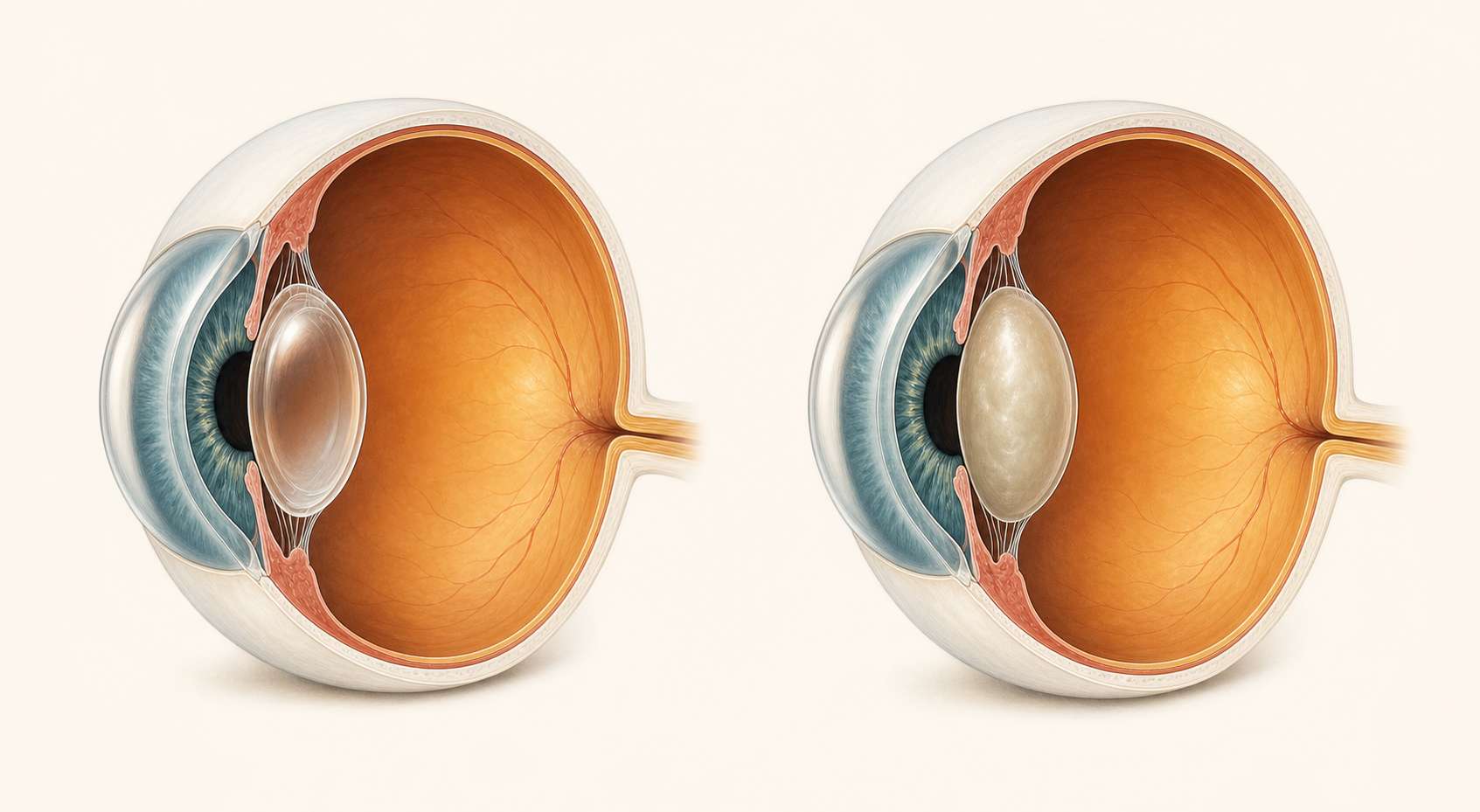
Second, pterygium. It is actually quite common in clinic: a fleshy tissue gradually grows on the white of the eye and creeps towards the cornea. Mild cases may become red or feel gritty; severe cases may affect vision.
It is related to long-term outdoor UV exposure and irritation from wind and dust. Outdoor workers, runners, cyclists, anglers and people doing activities at the beach should take particular note.
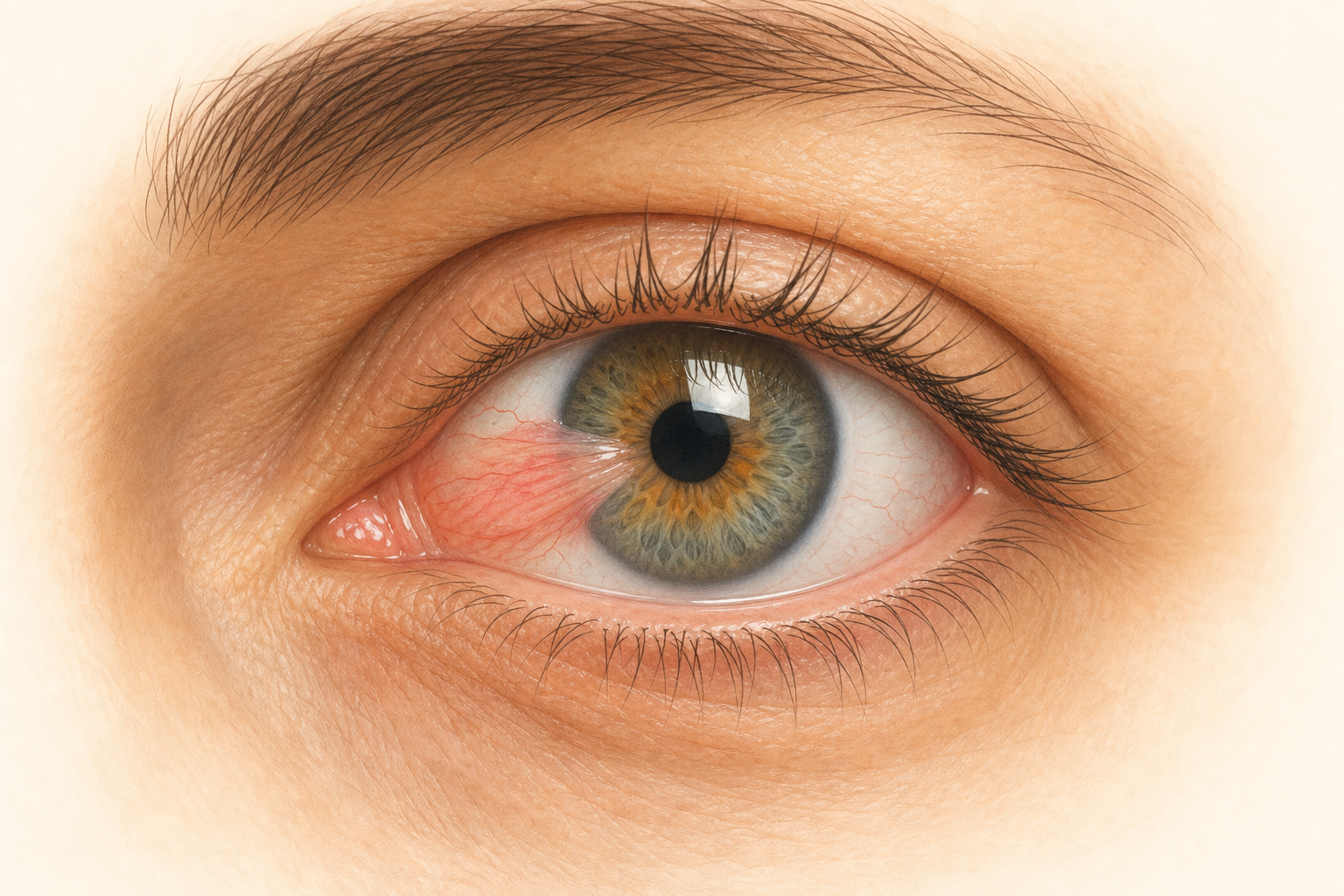
Third, sunburn of the eyes. Eyes can get sunburnt too; medically, this is called photokeratitis. After prolonged exposure to intense sunlight, there may be eye pain, tearing, light sensitivity or a gritty sensation.
Simply put, your eyes are protesting: “You put sunscreen on your face — do I not deserve any?”
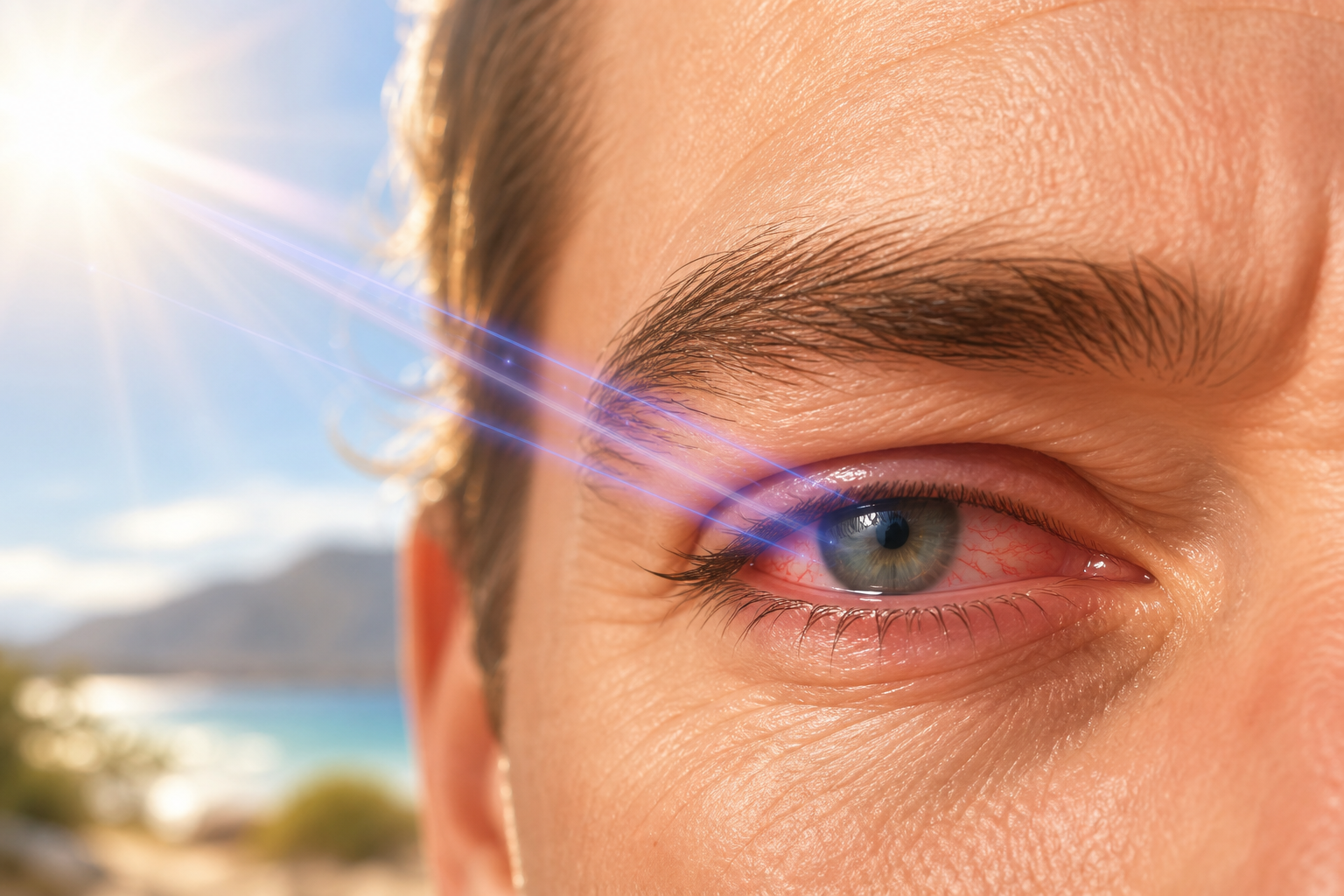
Fourth, the eyelids and skin around the eyes. Eyelid skin is very thin, and it can also age and burn in the sun. Many people do not dare apply sunscreen too close to their eyes because they worry it will sting. This is when large-frame sunglasses are particularly useful.
They can also reduce squinting. Whether they mean fewer crow’s feet is hard to say, but at least you do not have to make a “pain face” at the sun every day.
How should you choose sunglasses? Darker is not necessarily better
Many people think the darker the sunglasses, the better they protect the eyes. Not necessarily.
What really matters is whether they have:
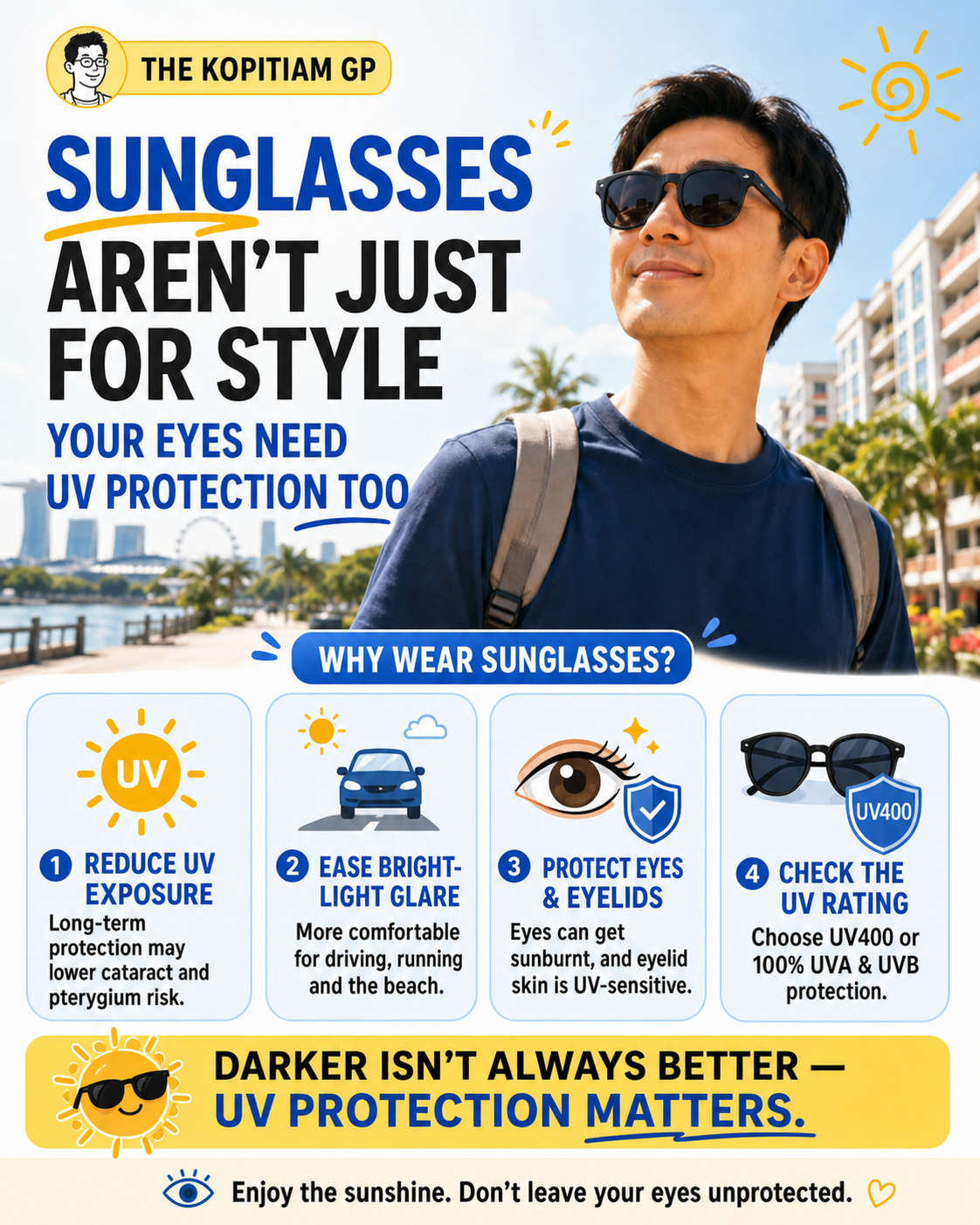
UV400 or 100% UVA/UVB protection
In other words, the key is not how dark the lenses are, but whether they block UV.
Here is a trap:
If a pair of sunglasses is only very dark but offers no UV protection, it may actually be worse. Dark lenses can cause the pupils to enlarge; if they do not block UV, more UV may enter the eyes.
It is like thinking you are holding an umbrella, only to find that the fabric is transparent plastic: it has plenty of ceremonial value, but very little protective power.
Remember these points when choosing sunglasses:
First, look for UV400, not just lens colour. Dark does not equal sun protection.
Second, larger frames with good wraparound coverage are more practical. A fair bit of light can leak in from the sides, especially while driving, at the beach or during outdoor sports.
Third, polarised lenses mainly reduce glare; they do not automatically mean UV protection. Polarisation is suitable for driving, fishing and waterside activities, but UV protection still needs to be confirmed.
Fourth, children can wear them too. Children spend long periods outdoors, so a hat together with suitable children’s sunglasses can be considered. The conditions are that they are safe, comfortable and the child is willing to wear them.
My view: sunglasses are not being fussy — they are long-term thinking
There is no need to overthink sunglasses.
In a place like Singapore, where the sun is around all year, a proper pair of sunglasses is a worthwhile investment in eye protection if you often drive, run, cycle or go to the beach.
They are not like aesthetic treatments, where you have something done today and expect a changed face tomorrow. They are more like brushing your teeth, applying sunscreen, or managing blood sugar and blood pressure.
You will not see anything dramatic in the short term. Over time, there may be a little less UV harm and a little less accumulated risk.
So yes, enjoy the sunshine. But enjoying it does not mean you need to tough it out with unprotected eyes.
Skin needs sun protection and moisturising. Eyes need a reliable pair of sunglasses too.
Life is already dazzling enough. As for the sun, block whatever you can.
Be the first to add a thoughtful comment.